

Your Future Self Will Thank You: The Teen's Guide to Sun Safety


Scrolling through your feed, hanging out at the pool, playing sports, or driving around with friends probably doesn't feel dangerous to your skin, but the sun exposure you get as a teen can affect your skin for decades. The good news? A few simple habits can dramatically lower your risk of skin cancer, premature wrinkles, and sun damage, and keep your skin healthy for the future.
Why Should You Care About Sun Protection?
You might think skin cancer is something that only affects older adults. The truth is that much of the damage that can lead to skin cancer starts when you're young. In fact, about 1 in 5 Americans will develop skin cancer by age 70, making it the most common cancer in the United States. 1
And those painful sunburns from summer break? They matter more than you think. Research shows that having multiple sunburns can significantly increase your risk of developing melanoma, the most serious form of skin cancer. 1
Skin cancer isn't the only reason to protect your skin now. UV radiation also causes up to 90% of visible skin aging, often called photoaging, including wrinkles, uneven skin tone, dark spots, loss of elasticity, and a leathery texture that can appear years earlier than expected. Even as a teenager, repeated sun exposure starts breaking down collagen and elastin, the proteins that keep skin firm and smooth. Those changes may not be visible today, but the cumulative damage adds up over time. 2
The scary part is that damage can happen even without a burn.
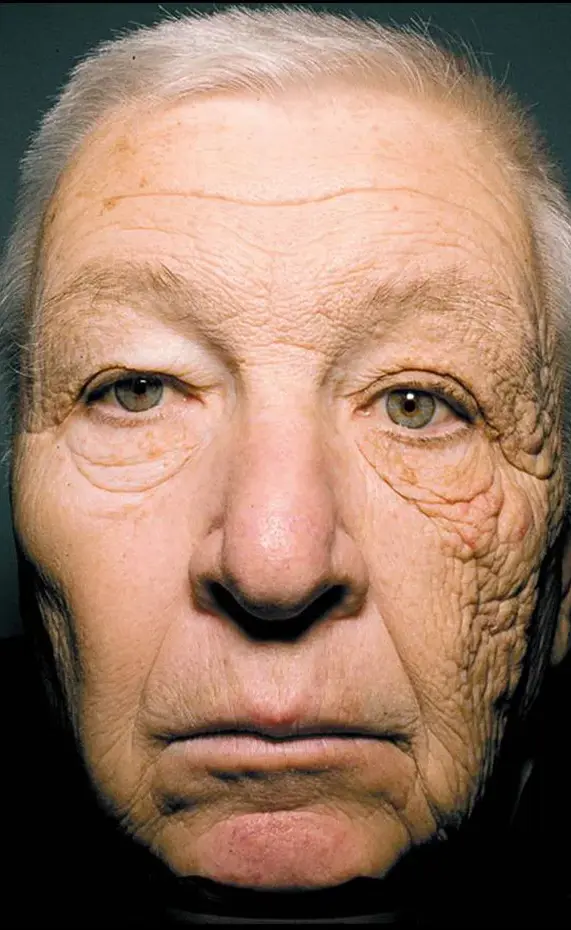
The Truth About Tanning 3
There is no such thing as a healthy tan.
A tan is your skin's response to UV-induced injury. When your skin darkens, it is trying to defend itself after damage has already occurred.
Social media has made tanning trends popular again. From "tan lines" to "tan-maxxing," it can sometimes seem like having a tan is the same thing as being healthy, active, or spending time outdoors.
Spoiler alert: it isn't.
One of the biggest misconceptions among teens is that a tan can be a "safe" alternative to burning. In reality, both tanning and burning signal UV damage. Even if your skin never turns red, UV radiation can still damage DNA in skin cells and, over time, contribute to skin cancer and premature aging.
You've probably heard someone say:
"I need to get a base tan before vacation so I don't burn."
Dermatologists have been trying to bust this myth for years.
A "base tan" doesn't prevent skin damage and doesn't meaningfully protect you from UV radiation.
Another common myth is that tanning beds offer a controlled, safer way to tan. The reality is that tanning beds expose users to concentrated ultraviolet radiation and are strongly linked to increased skin cancer risk. If you love the tanned look, self-tanners are a much safer option because they don't require UV exposure.
SPF: What It Actually Means 2
SPF stands for Sun Protection Factor. It measures how well a sunscreen protects your skin from UVB rays, the rays primarily responsible for sunburn.
The AAD recommends using:
Broad-spectrum sunscreen (meaning it also protects from UVA)
SPF 30 or higher
Water-resistant formulas when appropriate
For sunscreen to work effectively:
Apply it about 20 minutes before going outdoors
Cover all exposed skin
Reapply at least every two hours
Reapply sooner after swimming or heavy sweating
The best sunscreen is the one you'll actually wear consistently.
Makeup SPF Isn't Enough
Many makeup products now contain SPF, but dermatologists caution that makeup alone usually doesn't provide enough protection because most people don't apply enough product to reach the labeled SPF.
If you wear makeup, apply sunscreen first, then apply makeup on top. Tinted sunscreens can be a great option because they combine sun protection with cosmetic coverage.
Are You Applying Enough Sunscreen? Probably Not.
Most people wear far less sunscreen than what's needed to get the SPF protection listed on the bottle. SPF 30 sunscreen provides SPF 30 protection only when applied in the amount used during laboratory testing.
The Two-Finger Rule
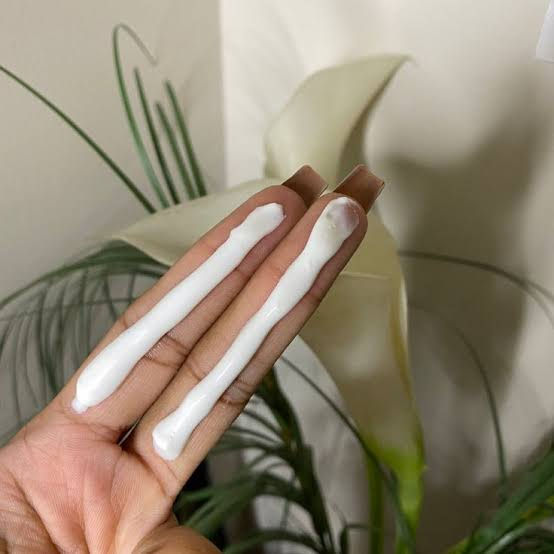
A simple way to apply the right amount of sunscreen to your face is the two-finger rule. Squeeze sunscreen in two full lines along the length of your index and middle fingers, then apply it evenly to your face and neck.
Think of it as a quick visual guide to help ensure you use enough product to get the protection promised on the label. If you use less than this amount, you're probably getting less protection than you think.
How Much for Your Entire Body?
At the pool, beach, sports practice, or any outdoor event where large areas of skin are exposed, dermatologists recommend about one ounce of sunscreen for the entire body. That's roughly enough to fill a shot glass.

Sun Safety Myth Busters 1
Myth #1: "I'm indoors most of the day."
UV rays can pass through windows, especially UVA rays that contribute to skin aging and skin cancer risk.
Myth #2: "It's cloudy, so I'm safe."
Up to 80% of UV rays can penetrate clouds. A cloudy day is not a UV-free day.
Myth #3: "I don't burn, so I don't need sunscreen."
Even if your skin tans easily or rarely burns, UV damage still occurs. Anyone can develop skin cancer.
Myth #4: "I have darker skin, so sunscreen isn't necessary."
People of every skin tone can experience sun damage and develop skin cancer. While darker skin contains more melanin, it doesn't fully protect against UV radiation.
Myth #5: "Sunscreen is only for girls."
Sunscreen is for people with skin. Whether you play football, skateboard, hike, swim, or spend time outdoors with friends, your skin needs protection
Know Your Skin 4
Most moles are completely normal, but it's still smart to watch for changes.
Dermatologists use the ABCDE rule:
A = Asymmetry
B = Border irregularity
C = Color variation
D = Diameter larger than about a pencil eraser
E = Evolving or changing over time

If you notice something new, changing, or unusual, tell a parent, guardian, or healthcare provider.
The Bottom Line
Future-you is counting on present-you.
The sunscreen you wear today won't just help you avoid an annoying sunburn before tonight's plans. It can lower your risk of skin cancer, prevent premature aging, and keep your skin healthier for years.
So wear the sunscreen. Reapply it. Ignore the tanning myths.
Your skin is with you for life, and it's worth protecting.
References
The Skin Cancer Foundation. Skin cancer Facts & Statistics. The Skin Cancer Foundation. Published March 18, 2026. https://www.skincancer.org/skin-cancer-information/skin-cancer-facts/
Sunscreen FAQs. https://www.aad.org/media/stats-sunscreen
The Skin Cancer Foundation. Skin Cancer Myths: Facts vs. Misinformation. The Skin Cancer Foundation. Published September 1, 2026. https://www.skincancer.org/risk-factors/skin-cancer-myths-misinformation/
Melanoma. https://www.aad.org/media/stats-melanoma

Comments